
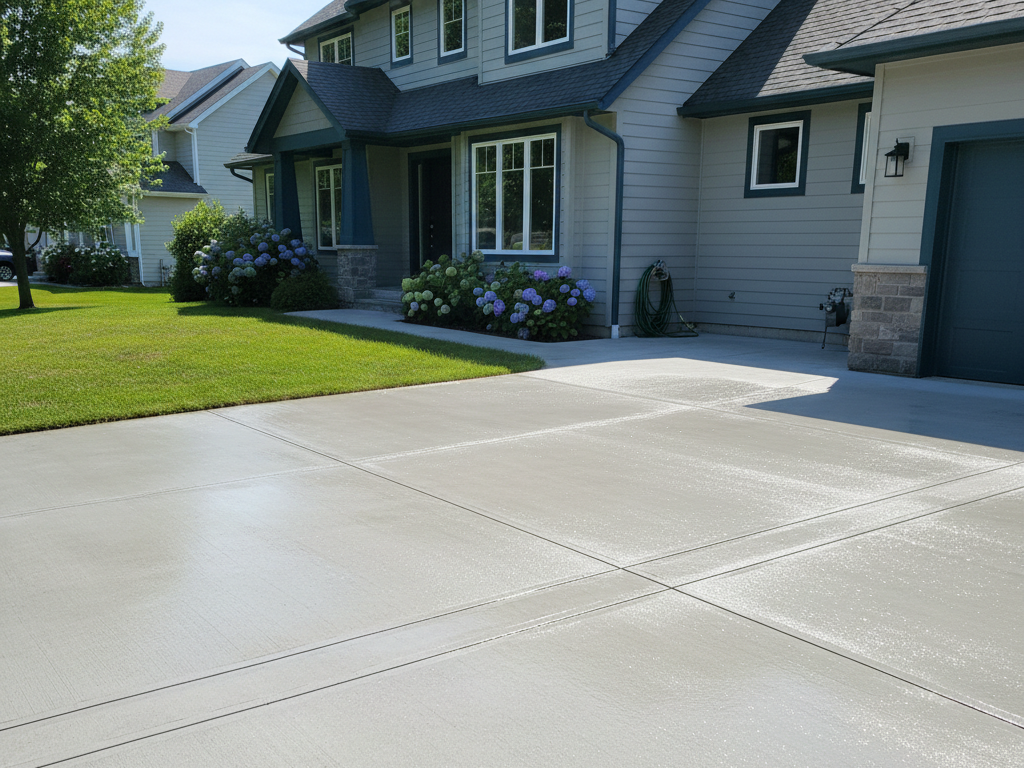
Algae, mildew, and road grime build up fast in New England. Here’s your complete guide to pressure washing timelines for decks, driveways, and siding.
Why Pressure Washing Matters More in New England
New England’s humidity, leaf litter, and harsh winters create the perfect environment for:
- Algae and mildew on north-facing siding and shaded decks
- Black streaks (Gloeocapsa magma bacteria) on roofs and siding
- Oil and salt stains on driveways from winter road treatment
- Moss and lichen on walkways and patios
Left untreated, these don’t just look bad — they degrade surfaces and can void warranties.
Best Time to Pressure Wash: Spring and Early Summer
Late April through June is the ideal window:
- Ground has thawed, reducing risk of water damage in cracks
- Before peak outdoor entertaining season
- Mild temps prevent rapid evaporation (better cleaning results)
- Before UV rays bake stains deeper into concrete
Surface-by-Surface Timeline
Driveways & Walkways
Frequency: Once a year, ideally late spring Why: Salt and sand from winter treatments leave behind residue that breaks down concrete over time.
Decks & Patios
Frequency: Once a year, before sealing/staining in spring Why: Wood and composite surfaces accumulate mold and mildew over winter. Pressure washing + sealing extends deck life significantly.
Vinyl & Wood Siding
Frequency: Every 1–2 years Why: Algae and oxidation dull your home’s appearance and can lead to moisture infiltration.
Fences
Frequency: Every 1–2 years before re-staining Why: Keeps wood healthy and prevents premature rot.
Signs You’re Overdue
- Green or black streaks on siding or driveway
- Slippery walkways (algae growth)
- Dull, grey-looking deck boards
- Your home looks darker than your neighbors’
Our Bundle Deal
Pairing pressure washing with window cleaning and gutter cleaning? Our Complete Home Package covers all three for a flat $995 — no matter the size.